Hair store owners and boutique operators face a massive financial risk every time they source new inventory. Stocking low-demand or poor-quality hair extensions leads directly to dead stock, customer chargebacks, and severe reputational damage. Verifying supplier claims about texture permanence, cuticle alignment, and processing methods remains incredibly difficult when sourcing products overseas. You need a reliable technical evaluation framework. This guide breaks down how to assess different textures, understand the manufacturing processes behind them, and build a profitable, high-turnover inventory portfolio. We will explore how to evaluate human hair bundles effectively to protect your bottom line. You will learn to spot synthetic fillers, test cuticle health, and match specific wave patterns to your local demographic. Stop relying on heavily edited factory photos. Start treating your inventory procurement as a strict technical process to ensure you only stock products that withstand daily wear.
Texture longevity is directly tied to the manufacturing process; steam-processed textures offer better cuticle integrity than chemically altered alternatives.
Inventory risk varies by texture: straight and natural wave patterns offer high turnover, while tighter curls require stricter quality control and customer education to prevent returns.
Evaluating wholesale human hair bundles requires standardized testing protocols for weft construction, shedding, heat tolerance, and the detection of synthetic fillers before committing to bulk orders.
Balancing raw and virgin hair across different texture profiles allows retailers to capture both premium and budget-conscious market segments while optimizing profit margins.
Success Criteria for Stocking Human Hair Bundles
Defining Inventory ROI
Establishing strict metrics for a successful product line prevents emotional purchasing decisions. Track the profit margin per bundle to ensure your markup covers overhead, packaging, and marketing costs. Monitor your average inventory turnover rate closely. High-turnover items generate cash flow, while slow-moving textures tie up capital on your shelves. Track return and complaint frequencies meticulously. A specific texture generating high margins loses its value entirely if it also produces a high volume of refunds and negative reviews. You must calculate the hidden costs of a return, which include lost shipping fees, unsellable used products, and the time spent managing angry customers. Set a hard threshold for acceptable return rates. If a specific texture exceeds a 3% return rate, pull it from your catalog and find a new supplier.
Clientele Demographic Mapping
Align your texture selection directly with your target demographic's natural hair types and styling preferences. Urban markets often show high demand for seamless blending textures, requiring specific crimp patterns or tight coils that match natural hair blowouts. Coastal or vacation-heavy demographics frequently purchase low-maintenance wave patterns that air-dry easily after swimming. Analyze your local market data and previous sales history to identify which textures move fastest. Stocking inventory based on local climate conditions also reduces complaints. High-humidity environments wreak havoc on poorly processed straight textures, causing them to swell and frizz. Conversely, dry heat environments pull moisture from tight curls, leading to brittle ends and snapping. Match the hair's structural strengths to the environment your customers live in.
Supplier Transparency Requirements
Demand baseline documentation and verifiable claims from all vendors before placing sample orders. Ask for the specific sourcing origin, as hair characteristics vary wildly between Southeast Asian, Indian, and Chinese donors. Require detailed explanations of their processing methods. Clarify whether the bundles contain single-donor or multi-donor hair. Multi-donor bundles often present varied cuticle health, impacting how the hair lifts during color processing. Reject suppliers who refuse to provide live factory floor videos. You need to see the wefting machines and the steam ovens. Follow these steps when vetting a new vendor:
Request a live video call during their operating hours to verify they own a physical factory, not just a trading office.
Ask the representative to walk over to the raw hair sorting area and show the unprocessed ponytails.
Demand a clear view of the triple-head wefting machines to verify their stitching process.
Request close-up shots of the steam ovens used for setting wave patterns.
Ask for their specific protocol regarding the removal of short return hairs (beards) from the wefts.
Inventory Models and Texture Consistency
Evaluate the operational risks of drop-shipping versus holding bulk inventory. Drop-shipping eliminates warehousing costs but completely removes your ability to perform quality control. Holding inventory remains mandatory for quality-checking highly processed textures before they reach the end consumer. Inspecting bundles physically allows you to catch bad batches, inconsistent wave patterns, and shedding issues. Maintaining physical stock protects your brand reputation and ensures your clients receive exactly what they ordered. When you rely on a factory to ship directly to your customer, you blindly trust them with your brand's reputation. A single bad batch of shedding hair can trigger a wave of credit card chargebacks that cripples your merchant account.
Technical Evaluation of Core Textures
Water Wave Human Hair Bundles
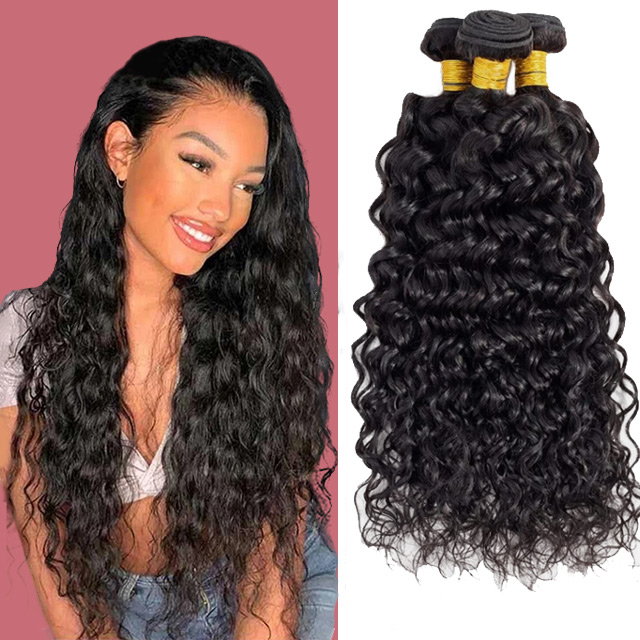
Factories achieve the distinct S-pattern of water wave human hair bundles through high-temperature steam processing. Workers wrap the hair around specific aluminum rods and bake it in industrial ovens to set the wave memory. This process carries a risk of pattern relaxation over time. Test the pattern bounce-back immediately after washing the sample. Check for excessive silicone coating. Subpar vendors often use heavy silicones to mask dry ends caused by over-baking the hair. Position this texture as a high-demand summer or vacation option. Educate your customers on moisture retention techniques. Warn clients that bleaching this texture to #27 or #613 permanently loosens the wave structure, turning a tight water wave into a loose, undefined body wave.
Kinky Curly Human Hair Bundles
Achieving tight ringlets requires intense steam processing. This prolonged exposure places significant stress on the hair cuticle. When evaluating kinky curly human hair bundles, test rigorously for matting at the nape of the neck. Evaluate the hair's porosity, as over-processed curls absorb moisture rapidly and dry out quickly. Perform strict burn tests on multiple strands from different parts of the bundle. Factories frequently sneak high-temperature synthetic fibers into tight curls to help hold the pattern and reduce manufacturing costs. This texture offers high margin potential but demands the strictest quality control. It yields the highest rate of customer complaints if sourced poorly. You must ensure the cuticles remain intact, or the hair will lock up into an uncombable mat within two weeks of installation.
Yaki Straight Human Hair Bundles
Manufacturers use a micro-crimping process to mimic blown-out natural hair. Thicker donor strands, typically from Chinese or Mongolian origins, hold this texture far better than fine Indian hair. Assess the subtlety of the crimp when inspecting yaki straight human hair bundles. Differentiate between light yaki and coarse yaki based on your clientele's needs. Test the heat tolerance extensively. Ensure the texture does not permanently flatten under ceramic flat irons at 400 degrees Fahrenheit. Highlight this texture as a staple for demographics seeking seamless blending with natural leave-out. Consistent quality in this category builds massive customer loyalty, as clients will return repeatedly for a texture that perfectly matches their natural blowout without requiring excessive heat damage to their own hair.
Natural Wave Human Hair Bundles
Differentiate clearly between true raw natural wave and steamed virgin natural wave. Raw natural wave remains completely unprocessed, meaning the pattern varies slightly from donor to donor. Steamed virgin natural wave offers a uniform, factory-set pattern. Check bundle-to-bundle consistency when evaluating natural wave human hair bundles. Verify the absolute absence of chemical odors, which indicate harsh acid baths rather than clean steam processing. Position this texture as your lowest-risk, highest-turnover foundational inventory item. Its styling versatility allows it to blend with a wide variety of natural hair types effortlessly. Clients can wear it in its natural state, press it bone straight, or curl it with a wand, making it the most versatile option on your shelf.
Loose Wave Human Hair Bundles
Factories utilize larger barrel steam processing to create this texture. Because the curves are wider, the pattern remains highly susceptible to dropping faster than tighter curl patterns. Advise your sourcing team to test the hair's ability to hold an artificial curl from a wand or iron after washing out the factory pattern. Frame loose wave human hair bundles as a premium offering for clients seeking maximum volume. This texture displays exceptionally well on store mannequins and digital storefronts. The visual appeal drives impulse purchases and elevates the perceived value of your entire catalog. Ensure the ends are thick and healthy, as loose wave patterns easily expose thin, scraggly ends caused by poor single-drawn manufacturing.
Evaluating Wholesale Human Hair Bundles: Features to Outcomes
Steam Processing vs. Chemical Processing
Analyze the structural impact of manufacturing methods on the hair shaft. Steam processing uses water vapor and heat to alter the hair's memory, keeping the cuticle largely intact. Chemical processing strips the cuticle using harsh acids, degrading longevity and causing severe tangling after a few washes. Identify chemical processing by checking for a distinct corn-chip or perm-like smell. Feel the texture; chemically stripped hair often feels unnaturally silky due to heavy silicone coatings. Use the burn test to confirm the absence of synthetic melting. When you wash chemically processed hair with a clarifying shampoo, the silicone washes down the drain, revealing a dry, bird's-nest texture that will infuriate your customers.
Detecting Fillers and Synthetic Blends
Unethical suppliers routinely cut costs by mixing animal hair, like yak, or synthetic fibers into their bundles. Inspect the hair under magnification to spot unnatural uniform thickness indicative of synthetic strands. Perform ash-analysis during burn tests. Wholesale human hair bundles should burn quickly, smell like burning feathers, and crumble into fine ash. Synthetic fibers melt into hard, sticky plastic beads and emit a toxic, chemical odor. Animal hair burns similarly to human hair but often feels significantly coarser and fails to hold heat-styled curls. You must pull strands from the top, middle, and bottom of the bundle, as factories often hide synthetic fillers deep inside the weft where casual buyers won't look.
Fiber Type
Burn Reaction
Odor Profile
Ash Residue
100% Human Hair
Catches fire quickly, stops burning when removed from flame
Burning feathers or hair
Crumbles easily into a fine, powdery ash
Synthetic Fiber (Kanekalon/Toyokalon)
Melts rapidly, continues to burn, drips
Harsh, toxic burning plastic
Forms a hard, sticky black bead that cannot be crushed
Animal Hair (Yak/Horse)
Burns similarly to human hair but slower
Stronger, more pungent burning organic smell
Crumbles into ash, but leaves a slightly gritty residue
Cuticle Alignment and Tangling Metrics
Define "Remy" in practical terms: all cuticles face the same downward direction, exactly as they grew from the scalp. Test cuticle direction using the friction test. Slide your thumb and index finger down the hair shaft; it should feel smooth. Slide them back up toward the weft; you should feel slight resistance. If the hair feels perfectly smooth in both directions, the factory stripped the cuticles entirely. Stripped cuticles guarantee severe long-term tangling risks once the temporary silicone coating washes away. Non-Remy hair, where cuticles face opposite directions, acts like Velcro. The cuticles lock together, causing massive matting at the nape of the neck within days of installation.
Weight, Density, and Weft Construction
The industry standard dictates 100 grams per bundle. Weigh your samples immediately upon arrival. Inspect for single versus double-drawn density. Single-drawn hair tapers naturally at the ends, while double-drawn hair remains thick from weft to tip. Evaluate the machine weft integrity carefully. Check for short return hairs, known as beards, at the top of the weft. Long beards cause severe itching and matting at the scalp. Pull the hair firmly near the track to check for shedding. Excessive glue usage on the weft indicates poor stitching quality. A high-quality triple-stitched weft requires zero glue to hold the hair in place. If you see a shiny, hard residue along the track, the factory is masking weak sewing.
Color Processing Compatibility
Lifting hair to lighter shades impacts the structural integrity of steam-processed textures. The bleaching process opens the cuticle, which can permanently alter or destroy factory-set curl patterns. Retailers must test-bleach samples before advertising any bundles as "color-safe." Apply a 30-volume developer and bleach powder to a small section. Monitor how quickly the hair lifts and assess the curl pattern after washing and conditioning. Hair that turns gummy or loses its wave entirely cannot be sold as premium color-safe inventory. If the hair lifts unevenly, displaying patches of orange and blonde, you are dealing with a multi-donor bundle mixed with synthetic fillers or previously dyed floor hair.
Conceptual Trade-Offs in Inventory Strategy
Raw Hair vs. Virgin Hair Economics
Compare the high upfront cost and sourcing difficulty of raw hair against the consistency, lower cost, and mass appeal of processed virgin hair. Raw hair requires significant capital and patience, as finding reliable single-donor sources proves challenging. However, it commands premium retail prices and attracts high-end clientele. Virgin hair offers uniform textures, predictable supply chains, and lower wholesale costs. Balancing both options allows you to capture budget-conscious buyers while maintaining a luxury tier for clients demanding maximum longevity. You must clearly label these tiers in your store to prevent customer confusion and manage expectations regarding texture consistency.
Pricing Strategies and Margin Expectations
Price premium, high-labor textures like kinky curly higher to account for the intense manufacturing process and the increased risk of returns. Foundational textures like natural wave cost less to produce and move faster, allowing for slightly lower margins but higher overall volume. Maximize store profitability by bundling foundational textures with closures or frontals. Remain competitive by analyzing local market rates, but never engage in a race to the bottom. Competing solely on price forces you to source lower-quality hair, ultimately destroying your brand. Establish your value through rigorous quality control, superior packaging, and excellent customer education rather than undercutting competitors.
High-Maintenance Textures vs. Customer Education
Stocking highly profitable curly textures introduces a significant customer service burden. Tight curls require daily hydration, detangling, and specific nighttime routines. Failure to educate your customers results in user-error damage, matting, and subsequent refund demands. Mitigate this trade-off by providing detailed care cards with every purchase. Create instructional videos demonstrating proper washing and detangling techniques. Shifting the responsibility of maintenance to the educated consumer protects your margins and reduces unfair chargebacks. When a customer understands that sleeping on wet curly hair without a silk bonnet causes matting, they stop blaming the hair quality and start taking accountability for their maintenance routine.
Broad Catalog vs. Niche Specialization
Evaluate the business case for offering every available texture versus specializing in top-tier versions of two or three specific textures. A broad catalog attracts a wider audience but ties up massive amounts of capital in slow-moving inventory. Niche specialization reduces overhead and establishes your store as the ultimate authority for a specific look. Mastering yaki straight and natural wave, for example, allows you to negotiate better bulk rates with suppliers and maintain stricter quality control over a smaller product range. Specialization also simplifies your marketing efforts, allowing you to dominate specific search terms and social media hashtags related to your core textures.
Implementation Risks and Supplier Mitigation
Batch Consistency and Quality Fade
Suppliers frequently utilize a tactic known as "bait and switch." They send flawless, premium samples to secure your business, followed by subpar, filler-heavy bulk orders. Quality fade occurs when a supplier slowly degrades the hair quality over several months to increase their own margins. Combat this by treating every bulk order as a new sample. Inspect random bundles from every shipment. Never assume your fifth order will match the quality of your first order without rigorous verification. Keep a control sample from your original approved batch in a sealed bag. Compare every new shipment against this control sample to detect subtle changes in density, texture, or cuticle health.
Establishing Testing Protocols
Implement a mandatory four-step testing phase for all new inventory before placing it on the sales floor. First, execute the bleach and dye test to check cuticle health and color uptake. Second, perform the high-heat test using a flat iron at 400 degrees to check for synthetic melting. Third, conduct the wash and air-dry test to evaluate the true texture without factory silicones. Finally, execute a 30-day wear test. Have a staff member install the hair to monitor tangling, shedding, and matting under real-world conditions. Document the results of these tests meticulously. If a batch fails any of these four steps, reject the entire shipment immediately.
Structuring Purchase Agreements
Negotiate strict return policies for defective batches before transferring any funds. Utilize secure payment methods like PayPal or Alibaba Trade Assurance, which offer buyer protection against fraudulent suppliers. Avoid direct wire transfers to unverified factories. Set clear, written quality benchmarks in your vendor communications. Specify the exact acceptable beard length on the wefts, the required weight per bundle, and the prohibition of synthetic fillers. Written agreements provide crucial leverage if you need to dispute a transaction. State clearly that any detection of synthetic fibers during your burn test will result in an immediate chargeback and termination of the vendor relationship.
Packaging and Presentation
Elevate the perceived value of your inventory through premium packaging. Custom branding, satin silk wraps, and high-quality care-instruction inserts justify premium retail pricing. Customers associate heavy, luxurious packaging with high-quality hair. Poor presentation diminishes the perceived value, even if the hair itself is top-tier. Invest in custom tags that wrap around the bundles, ensuring your brand remains visible even after the customer removes the hair from the primary shipping box. Use thick, durable shipping boxes that protect the hair from crushing during transit. A crushed box signals cheapness to the buyer before they even touch the product.
Conclusion
Audit your current inventory performance to identify slow-moving textures and high-return items.
Order sample batches of the core textures discussed and subject them to the four-step testing protocol.
Draft a standardized vendor agreement outlining your strict quality requirements and return policies.
Design and print detailed care-instruction cards specific to curly and wavy textures to reduce user-error complaints.
FAQ
Q: What is the difference between raw and virgin human hair bundles?
A: Raw hair is completely unprocessed, collected from a single donor, and retains its natural texture and color. Virgin hair is typically collected from multiple donors and undergoes steam-processing to achieve uniform, factory-set textures like water wave or loose wave, though it remains free of harsh chemical dyes.
Q: How can I test wholesale human hair bundles for quality before buying in bulk?
A: Execute three core tests: the burn test to detect melting synthetic fillers, the wash test to remove silicone coatings and check for chemical smells, and the friction test to verify proper downward cuticle alignment.
Q: Why do kinky curly human hair bundles require more maintenance?
A: The tight, steam-processed coils make it difficult for natural scalp oils to travel down the hair shaft. This structural reality requires consistent external hydration and careful detangling to prevent brittle ends, severe tangling, and matting at the nape.
Q: Can steam-processed human hair bundles be bleached or dyed?
A: While high-quality virgin hair can be bleached, lifting the hair to lighter blondes like #613 requires harsh developers. This chemical process can permanently loosen or destroy tight, steam-processed curl patterns like water wave or kinky curly.
Q: What does "double drawn" mean when evaluating hair bundles?
A: Double drawn refers to a labor-intensive process where shorter hairs are removed by hand during manufacturing. This ensures the bundle remains thick, full, and voluminous from the weft all the way down to the ends, unlike single drawn hair which tapers off.
Q: How long should steam-processed textures like loose wave or water wave last?
A: With proper maintenance, nighttime wrapping, and regular hydration, these textures typically last 6 to 12 months. However, the factory-set pattern will naturally relax over time and require manual re-styling with heat tools or flexi-rods.
Q: Is yaki straight hair chemically processed or steam processed?
A: High-quality yaki straight hair is steam-processed using a micro-crimping machine to mimic the texture of blown-out natural hair. Low-quality vendors, however, may use harsh chemical perms to achieve a similar look, which degrades the hair rapidly.
We are always ready to assist you with your inquiries. You can contact us via email or WhatsApp, and we will make every effort to help resolve your issues and meet your needs.