Retail buyers are increasingly fatigued by inconsistent quality on massive marketplaces. They often receive products failing to match advertised photos. Consequently, they actively seek out trusted independent salons and direct-to-consumer brands. Consumers want reliability, transparency, and expert curation.
For store owners, capitalizing on this shift is crucial. You must transition from stocking generic, low-tier inventory. Instead, you need to curate high-retention, retail-ready products. Your inventory choices directly dictate your customer loyalty and brand reputation. Stocking outdated or flawed units leads to frustrating return processes. High return rates quickly destroy your profit margins and damage trust.
To capture high-value customers without eroding margins through returns, you must adapt. Retailers need to align their inventory with current wear-and-go trends. Convenience is the new industry standard. Furthermore, you must enforce rigorous evaluation frameworks when selecting a wholesale partner. Focusing purely on unit price is a trap. You must adopt a comprehensive cost-aware approach to thrive.
Key Takeaways
Consumer demand has strictly pivoted toward low-friction installations (glueless caps, pre-cut HD lace) over traditional bundle-and-frontal sew-ins.
Selecting a wholesale partner requires moving beyond factory-floor unit pricing to calculate the full landed cost, factoring in shipping, defect rates, and packaging.
Implementing objective QA frameworks—like pre-shipment inspections (PSI) and physical stress tests on samples—is non-negotiable for mitigating retail return rates.
Investing in "retail-ready" customizations (custom tags, accurate sizing specs, anti-tamper seals) drastically reduces customer service overhead and boosts brand authority.
The Frontal Lace Wigs Driving Retail Demand
Consumers prioritize convenience today. They actively reject traditional sew-ins requiring professional installation and messy adhesives. High-demand inventory now centers on glueless cap constructions. Buyers also expect pre-cut lace straight out of the box. These formats eliminate adhesives entirely. They allow users to install their hair in minutes rather than hours. Retailers stocking Frontal Lace Wigs must prioritize these wear-and-go features to stay competitive.
Data consistently points to specific high-converting configurations. Market insights reveal 13x6 cap dimensions dominate sales. This size offers deep parting space and exceptional styling versatility. Pair this 13x6 cap with body wave or deep wave textures. These specific textures currently yield the highest inventory turnover rates globally.
You must also navigate the trade-off between HD lace and transparent lace. Both serve different consumer segments. Understanding this distinction helps you manage customer expectations and reduce returns.
Lace Material | Realism Level | Durability | Best Target Audience |
HD Lace | Ultra-realistic. Blends flawlessly with all skin tones. | Structurally fragile. Prone to tearing if pulled tightly. | High-end buyers, experienced wearers, luxury salons. |
Swiss/Transparent Lace | Highly natural. Requires slight tinting for darker skin. | Very durable. Resists tension and daily wear-and-tear. | Beginners, budget-conscious buyers, daily commuters. |
Modern buyers are also rejecting heavy, unnatural hair densities. In the past, 180% to 200% density units ruled the market. Today, consumers favor lighter, more breathable options. Densities around 130% to 150% look more realistic. These lighter units specifically cater to sensitive scalps. They also provide immense relief for medical hair-loss demographics requiring daily comfort.
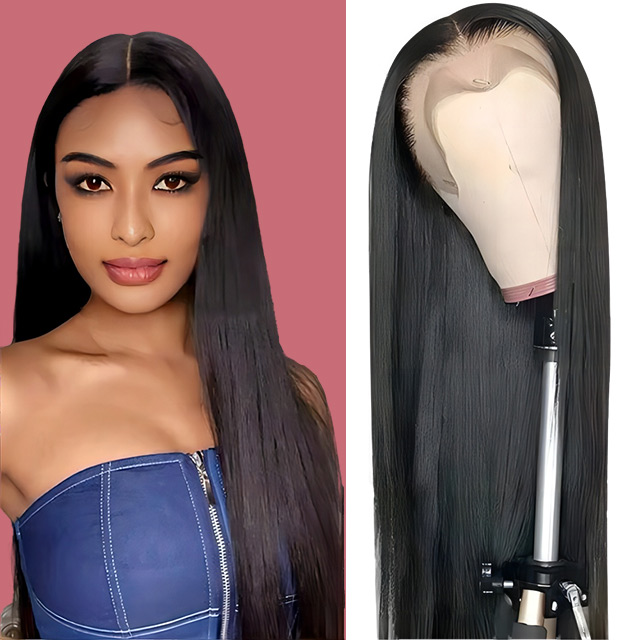
Evaluating a Lace Wigs Manufacturer: Beyond the Unit Price
Sourcing exceptional inventory begins with vetting your supply chain. You must differentiate between a genuine factory and a trading company. Trading companies simply act as middlemen. They mark up prices and offer limited quality control. A legitimate Lace Wigs manufacturer will eagerly verify their production capabilities. Request raw factory floor footage. Ask for clear capacity documentation. You should also verify their history of executing OEM and Private Label orders.
Never rely solely on showroom samples. Suppliers naturally send their absolute best work when trying to win your business. You must implement a two-sample verification strategy to prevent bait-and-switch tactics. Secure a random line-pull sample alongside the optimized display unit. Comparing these two units reveals the factory's true production consistency.
Once you receive samples, you must establish a baseline for product integrity. Do this before committing to bulk orders. Implement standardized physical stress-testing to validate quality.
Thermal Limits: Perform rigorous heat tolerance checks. Apply a styling wand set to 160–180°C. Hold the heat on the hair shaft for exactly 10 seconds. Premium hair will hold the curl without burning or melting.
Shedding and Tangle Baselines: Execute multi-pass comb tests. Run a fine-tooth comb through the unit from roots to ends. Complete a minimum of 10 consecutive passes. Minimal shedding is acceptable, but excessive clumps indicate poor knotting.
Cuticle and Porosity Integrity: Run your fingers up the hair shaft to check cuticle alignment. Friction indicates inverted cuticles. Next, perform swatch coloring tests. Apply a professional lightener to verify the processing history. Virgin hair will lift cleanly.
Building a Moat with Custom Lace Wigs
Differentiating your catalog is critical in a saturated market. Offering nuanced cap architectures sets your brand apart. Tailor these designs to specific customer pain points. Many buyers struggle with poor fit and tension headaches. Offering custom Lace Wigs solves these issues directly.
Consider stocking specialized structural customizations. Ear-to-ear frontal coverage provides seamless updos. Temple-to-temple lace offers a budget-friendly natural hairline. You should also explore comfort-lined caps. These feature soft internal fabrics designed for individuals experiencing medical hair loss. Providing specialized solutions builds immense brand loyalty.
Furthermore, demand retail-readiness from your vendor. A premium partner should deliver out-of-the-box readiness. You should not waste labor hours re-packaging bulk inventory. Evaluate their ability to provide the following retail enhancements:
Custom-branded boxing matching your brand aesthetic.
Barcode integration for streamlined warehouse scanning.
Anti-moisture packets protecting units during ocean freight transit.
Tamper-evident seals preventing fraudulent return claims.
Modern consumers deeply scrutinize supply chains. Ethical and sustainable sourcing is no longer optional. Retailers must audit partners for safe working conditions. For example, factories must provide proper ventilation during the knot-bleaching process. You should also demand verifiable, humane sourcing origins. Sourcing raw temple hair ensures ethical collection practices and superior longevity.
Calculating the Full Cost of Bulk Orders
Relying solely on unit price is a fundamentally flawed metric. Factories often lure buyers with incredibly low unit costs. However, they later add exorbitant shipping fees or deliver high defect rates. True cost assessment must encompass the entire landing cost formula. This comprehensive approach protects your margins.
Your true landing cost formula includes several variables. Combine the unit cost, packaging fees, and QA inspection costs. Add the freight charges. Finally, factor in customs duties. Always clarify shipping terms. Understand the difference between Delivery Duty Paid (DDP) and Free On Board (FOB). DDP includes taxes and prevents unexpected customs bills upon arrival.
You must also factor in tolerance margins. Manufacturing hair is largely a manual process. Slight variations will occur. However, even a ±5% deviation in hair density or length triggers retail returns. A customer expecting 150% density will immediately notice a 145% unit feeling thin. Build an anticipated defect and return allowance into your final retail pricing model. This financial buffer absorbs the cost of inevitable quality deviations.
Developing a strategic inventory mix stabilizes overall catalog profitability. Long lengths (26 to 30 inches) carry a premium perception. They maintain the illusion of a full-service, luxury brand. However, they often yield lower profit margins due to high raw material costs. Conversely, fast-moving short lengths (like 10-inch bobs) offer high margins. Blend these categories strategically. Let the high-margin short lengths subsidize the premium long lengths.
Implementing Bulletproof QA and Logistics
Quality assurance mitigates financial risk. You must establish a rigid QA framework to protect your brand reputation. The "Approved Sample" anchor is your most vital tool. Maintain an initial, mutually approved physical sample in your office. This unit serves as the undeniable baseline for all future bulk deliveries. If a bulk shipment deviates from this anchor, you have tangible proof for dispute resolution.
Do not wait until goods arrive to inspect them. Implement Pre-Shipment Inspections (PSI) at the factory level. Establish a non-negotiable QA checklist prior to container loading. Hire third-party inspectors if necessary. They must catch density drops, severe lace fraying, or incorrect knot-bleaching before the units leave the origin country.
Logistics and structural integrity require careful planning. Match your freight method to your volume and urgency. Use express air shipping for samples. Utilize standard air freight for mid-tier restocking. Reserve sea freight for massive bulk replenishment to maximize margin savings.
Finally, mandate crush-proof carton specifications. Poorly packed shipments permanently deform delicate frontal lace. A squished HD lace cap rarely recovers its shape. Deformed units become entirely unsellable, destroying your entire container's potential earnings.
Conclusion
Transitioning from a casual reseller to a recognized independent wig brand requires treating sourcing as a strict risk-mitigation exercise. You must protect your margins by prioritizing consistency over mere cheapness. Success belongs to retailers who control their supply chain tightly.
When evaluating suppliers, prioritize manufacturers offering transparent full-cost breakdowns. Shortlist vendors willingly submitting to rigorous sample testing. They must possess the robust infrastructure necessary to support retail-ready customizations.
Take immediate action to optimize your inventory. Begin by auditing your current return data to identify specific quality gaps. Next, order two-stage samples from a shortlist of three to four vetted suppliers. Run comprehensive physical stress tests on these units before entering major Q4 buying cycles.
FAQ
Q: What is an acceptable density tolerance when ordering frontal lace wigs in bulk?
A: A reliable manufacturer should maintain a density tolerance of ±5%. Anything beyond this drastically alters the wig's appearance and can lead to customer complaints regarding value.
Q: How do I choose between Dropshipping and Wholesale bulk ordering?
A: Dropshipping is an effective, low-risk method for A/B testing new styles or verifying a supplier's reliability. Once a style proves high-converting, transitioning to wholesale bulk orders is necessary to control QA, apply custom branding, and lower the overall cost.
Q: How long is a standard production cycle for custom lace wigs?
A: Depending on the complexity of the customization (e.g., hand-tied HD lace vs. machine-wefted backs) and order volume, bulk production typically ranges from 7 to 25 days, excluding freight transit time.
Q: How can I reduce sizing-related returns for online sales?
A: Source caps with adjustable tension bands and implement strict sizing education on your product pages. Mandating four specific measurements from customers—circumference, front-to-nape, ear-to-ear, and temple-to-temple—can drastically cut fit-related return rates.


