The moment curly extensions are installed, they often look vibrant, soft, and full of movement. Over time, however, many users notice changes in texture, definition, or manageability, not because the hair itself is poor quality, but because the care routine is not suited to curly textures. Understanding how to maintain black curly hair bundles is essential for anyone who wants long-term performance, whether you are an individual wearer, a salon professional, or a retailer serving end customers. Drawing on years of production and after-sales feedback, S.human hair shares a detailed, practical guide focused entirely on curly bundle maintenance, helping customers protect curl structure, reduce damage, and extend the usable life of their hair.
What Ruins Curly Bundles Fast
Dry brushing and aggressive detangling
Curly hair relies on its natural curl pattern for strength and elasticity. Dry brushing pulls curls apart, stretches the hair unevenly, and creates unnecessary friction. Over time, this leads to frizz, breakage, and a rough texture that is difficult to restore. Many customers damage their bundles unintentionally by treating them like straight hair, especially when styling in a hurry.
Aggressive detangling is another common issue. Pulling through knots without moisture weakens strands and stresses the weft area. Once the weft becomes loose or distorted, the hair is more likely to shed and tangle. Gentle handling is not optional for curly bundles; it is the foundation of proper care.
Product buildup at the weft and heavy oils
Curly hair needs moisture, but excess product can be just as damaging as dryness. Heavy oils and thick creams tend to accumulate near the weft, especially when applied repeatedly without regular cleansing. This buildup attracts dust, causes dullness, and increases friction between strands.
Over time, buildup can also affect how curls respond to water and conditioner, making them feel stiff or sticky. Lightweight products applied mainly to the lengths and ends help keep curls responsive and reduce unnecessary residue at the base.
Washing Routine That Keeps Curls Defined
Pre-detangle while damp for controlled washing
Washing curly bundles without preparation often leads to tighter knots and uneven curl definition. Before washing, lightly dampen the hair and apply conditioner to create slip. This allows curls to separate smoothly and prevents tangles from tightening under running water.
Sectioning the hair during this step gives better control, especially for tighter curl patterns. Taking time here reduces stress on the hair and shortens the overall washing process.
Sulfate-free cleansing and the role of water temperature
Cleansing is essential, but harsh shampoos can strip curly hair of moisture and elasticity. Sulfate-free shampoos remove dirt and product residue without disrupting the natural balance of the hair. Water temperature should remain lukewarm; very hot water can dry out the strands and weaken curl memory.
During washing, focus on gently massaging the hair rather than rubbing or twisting it. Let the water flow downward to maintain curl alignment and reduce tangling.
Deep conditioning for moisture retention
Deep conditioning restores hydration and elasticity to curly bundles. This step is especially important after washing or extended wear. Allowing the conditioner to sit for several minutes gives the hair time to absorb moisture evenly, helping curls rebound and regain softness.
For most users, deep conditioning once every one to two weeks is sufficient. Hair worn daily or exposed to heat styling may benefit from slightly more frequent treatments.
Curly bundle care schedule
Task | Frequency | Tools or products | Common mistakes | Result you should see |
Detangle | Before washing | Conditioner, fingers | Dry detangling | Smooth curl separation |
Wash | Every 1–2 weeks | Sulfate-free shampoo | Hot water | Clean, flexible curls |
Deep condition | Biweekly | Moisturizing mask | Skipping treatment | Softer, defined texture |
Refresh | As needed | Water, leave-in | Too much product | Revived curl shape |
Following a consistent schedule helps maintain predictable results and reduces the need for corrective treatments.
Detangling Without Killing the Curl Pattern
Finger detangling versus wide-tooth combs
Finger detangling allows the most control and minimizes stress on the curls. It is ideal for daily maintenance and light detangling. Wide-tooth combs can be useful after washing, but only when the hair is wet and well-conditioned.
Using brushes or fine-tooth combs disrupts curl formation and should be avoided. The goal is to separate curls, not pull them straight.
Starting from the ends and moving upward
Detangling should always begin at the ends, where tangles form most easily. Gradually working upward prevents small knots from tightening and reduces tension on the weft. This technique preserves both curl integrity and overall density.
Patience during detangling directly affects how long curly bundles remain usable and visually appealing.
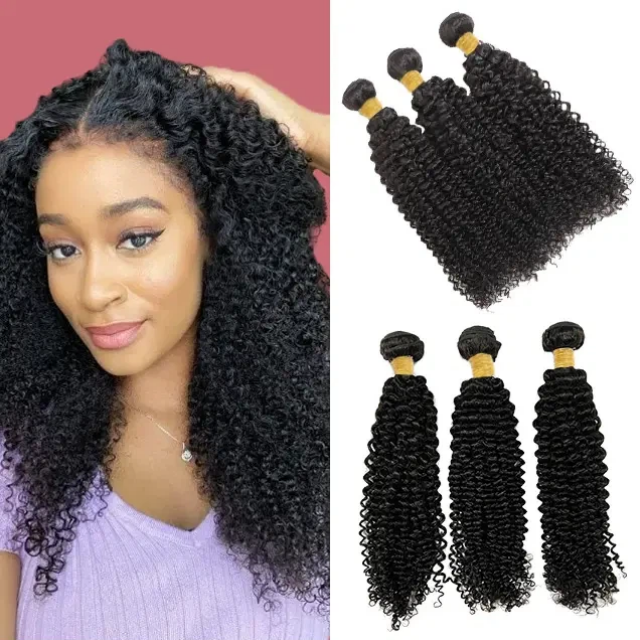
Daily Refresh for Natural Curl Movement
Water, leave-in, and scrunch method
Curly bundles do not need frequent washing to look fresh. A light refresh using water and a small amount of leave-in conditioner often restores curl shape within minutes. Scrunching upward encourages curls to reform naturally without heat or heavy styling.
This approach maintains moisture balance and avoids unnecessary product buildup.
Managing frizz in humid or dry environments
Environmental conditions influence curl behavior. In humid weather, curls may expand and frizz more easily, while dry climates can cause stiffness. Using climate-appropriate products and limiting excessive handling helps maintain a controlled appearance throughout the day.
Night Care and Storage
Protecting curls while sleeping
Nighttime friction is a major cause of frizz and dryness. Sleeping on silk or satin surfaces reduces moisture loss and helps curls retain shape. Gathering the hair loosely prevents flattening and tangling.
Consistent night care significantly reduces morning styling time and extends the overall life of the bundles.
Proper storage when bundles are not installed
When bundles are removed, they should be cleaned, conditioned, and fully dried before storage. Gently coiling the hair and placing it in a breathable bag keeps curls intact. Avoid compressing or stacking bundles tightly, as this can distort curl patterns.
Proper storage ensures the hair is ready for reuse without extensive restoration.
When to Replace Versus Reuse
Signs the hair needs a reset
Loss of definition does not always mean the hair is damaged. Clarifying washes followed by deep conditioning can remove buildup and revive curls. If the hair responds positively, continued use is appropriate.
Signs replacement is necessary
Persistent tangling, damaged wefts, or curls that no longer recover after conditioning indicate that replacement may be the better option. Setting realistic expectations helps users plan future purchases efficiently.
How Production Quality Supports Easier Maintenance
Hair that is processed consistently is easier to maintain. Factory-controlled sourcing, texture formation, and quality checks reduce issues such as uneven curl patterns or weak wefts. At S.human hair, integrated production allows better control over these factors, which directly benefits end users during daily care.
Customers often notice that well-processed hair requires less corrective styling and responds better to routine maintenance.
Maintenance From a Professional and Retail Perspective
For salons, proper maintenance guidance ensures clients return satisfied and confident. For retailers and wholesalers, sharing clear care instructions reduces complaints and increases repeat orders. Education is a key part of long-term customer relationships in the human hair industry.
Conclusion
Maintaining curls is a balance of moisture, gentle handling, and consistent protection. When done correctly, curly bundles remain soft, defined, and reliable over extended use. Learning how to maintain black curly hair bundles properly protects both appearance and value. With in-house production and strict quality control, S.human hair supplies products designed for durability and real-world wear. If you want personalized care advice based on your curl pattern and installation method, contact us today to receive a tailored guide for your curly hair bundle maintenance routine.
FAQ
How often should black curly hair bundles be washed?
Most curly bundles perform best when washed every one to two weeks, depending on product use and wear frequency.
Can I apply oil daily to curly bundles?
Light oils can be used sparingly, but daily heavy oil application often leads to buildup and dull curls.
Why do curls lose definition over time?
Loss of definition is usually caused by dryness or product residue. Proper washing and conditioning often restore curl shape.
Are maintenance needs different for tight curls versus loose curls?
Yes, tighter curls usually need more moisture and gentler handling, while looser curls require less frequent conditioning.


