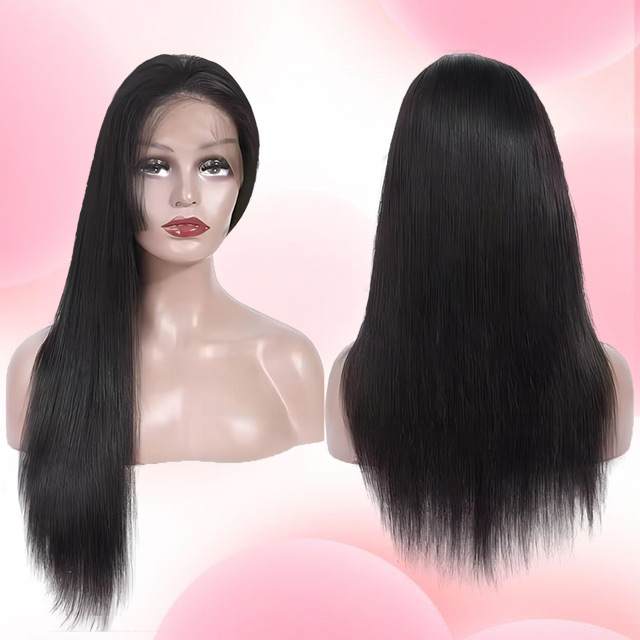
Customizing a high-quality wig is a standard requirement for achieving a personalized look. Applying chemical treatments to a delicate lace matrix carries a high risk of irreversible damage. Consumers frequently ruin expensive units by staining the sheer lace or chemically destroying the hair cuticles. This happens because they fail to evaluate the wig's base material and processing history prior to coloring. You can absolutely dye full frontal lace wig units, provided you understand the structural limitations of the hair and the porosity of the lace base. This guide provides a technical evaluation framework to determine if your unit is suitable for chemical processing. We outline risk-mitigation strategies to successfully deposit or lift color without compromising the lace integrity or hair longevity.
Material Dictates Viability: Only a virgin human hair full frontal lace wig can predictably withstand both lifting (bleaching) and depositing (darkening) chemical processes.
The Golden Rule of At-Home Dyeing: It is always safer and more predictable to deposit color (dye the unit darker) than to lift color (bleach). Working with bleach at home significantly increases the risk of cuticle destruction.
Lace Protection is Non-Negotiable: Exposing the frontal lace to hair dye will permanently stain the material, destroying the illusion of a natural scalp and rendering the unit unwearable.
Texture Impacts Processing: Chemical processing alters the structural bonds of the hair; aggressive dyeing requires specific post-color care routines to maintain the integrity of textured units.
Supplier Transparency is Critical: Sourcing from a reputable human hair wig supplier guarantees the absence of synthetic fillers or hidden textile dyes that react unpredictably to standard hair color.
Success Criteria: Evaluating Your Wig for Chemical Processing
Not all wigs are manufactured to withstand secondary chemical processing. Attempting to dye an incompatible unit results in melted fibers, patchy color, or severe shedding. Before mixing any developer or colorant, you must assess the physical properties of the unit. The origin of the hair fibers and their previous chemical exposure dictate exactly how they will react to oxidative dyes on the salon floor.
Material Evaluation: Human Hair vs. Synthetic
Synthetic fibers consist of fine plastic filaments, typically acrylic or polyurethane. These materials lack the natural cuticle structure required to absorb traditional oxidative hair color. Applying standard salon dye to a synthetic wig simply coats the strands in a messy residue that washes right off in the sink. To alter synthetic fibers, you must use specialized disperse fabric dyes heated to near-boiling temperatures. This process easily melts the wig if you do not monitor the water temperature perfectly.
Therefore, a 100% human hair full frontal lace wig is the absolute baseline requirement for standard salon-grade coloring. Human hair possesses a porous cuticle layer that opens when exposed to alkaline developers. This allows color molecules to penetrate the cortex and permanently alter the pigment. If you suspect your unit contains synthetic fillers, pull a single strand and hold a lighter to it. Human hair burns and turns to ash, smelling like burnt feathers. Synthetic hair melts into a hard plastic bead and smells like burning chemicals.
Processing History: Virgin vs. Pre-Colored Hair
Virgin hair refers to bundles that have never undergone chemical processing. The cuticles remain intact and align in a single direction. This creates the optimal canvas for both lifting and depositing color. Virgin hair lifts predictably when bleached and absorbs deposited tones evenly. You can confidently use a 20-volume or 30-volume developer on virgin hair to achieve significant color shifts.
Conversely, factory-dyed units present a massive challenge. Manufacturers often use highly concentrated, permanent textile-grade dyes to achieve uniform colors across large batches of hair. Applying bleach over these factory dyes leads to unpredictable lifting. You will often expose stubborn orange or brassy underlying pigments that refuse to tone out. Furthermore, bleaching already-processed hair causes extreme cuticle damage, leading to severe tangling and breakage.
If your wig is not 100% virgin, adhere strictly to the "darker, not lighter" principle. You should only attempt to dye a pre-colored unit a darker shade. Depositing color requires lower volumes of developer (typically 10-volume), inflicting minimal structural stress on the hair shaft while avoiding catastrophic chemical reactions.
Texture Considerations and Structural Integrity
The texture of the unit heavily influences the application process and the final result. A straight full frontal lace wig is the easiest to process evenly. The smooth surface allows dye to glide down the hair shaft without pooling. However, straight hair also shows color variations and patchiness very clearly. You must use precise, methodical application techniques to ensure seamless saturation.
Textured units require a different approach. A body wave full frontal lace wig relies on specific structural bonds to maintain its "S" pattern. Chemical processing, especially bleaching, breaks down the disulfide bonds within the hair cortex. Aggressive lifting relaxes these bonds permanently. You must weigh the trade-off between extreme color customization and curl pattern retention. Depositing darker colors generally leaves the wave pattern intact. Heavy bleaching will almost certainly require you to manually restyle or heat-train the waves back into the hair after processing using flexi-rods or a curling iron.
Pre-Dye Preparation: Setting Up for Success
Proper preparation prevents uneven color absorption and protects the structural integrity of the lace base. Skipping these steps often results in a ruined unit, regardless of how high-quality the dye is. Follow a strict sequence to prep the hair canvas.
Clarification and Stripping: Manufacturers frequently coat human hair wigs in silicone-based serums before shipping. These silicones create a brilliant, temporary shine and prevent tangling during transit. However, silicone acts as a waterproof barrier that blocks color molecules from penetrating the hair cuticle. You must wash the unit with a strong clarifying shampoo prior to dyeing. Work the lather gently through the lengths of the hair without vigorously scrubbing the lace. Rinse thoroughly with warm water to ensure all factory residues strip away. Do not apply conditioner at this stage. Conditioner re-coats the hair and hinders color absorption.
Detangling and Sectioning: Chemical processing introduces significant stress to hair fibers. You must eliminate all knots before applying dye. Use a wide-tooth comb or a specialized detangling brush. Start at the very ends of the hair and slowly work your way up to the roots. Never pull forcefully near the lace base. The knots tying the hair to the lace are delicate; aggressive pulling creates micro-tears in the matrix. Once fully detangled, section the hair into four manageable quadrants using plastic clips. Avoid metal clips, as they react negatively with the oxidative chemicals in the hair dye.
Mounting the Unit: Attempting to dye a wig while holding it in your hands guarantees a messy, uneven application. Secure the wig to a canvas block head that matches your head circumference. This maintains the cap's shape and prevents the lace from stretching out of proportion. Use rust-proof T-pins to anchor the wig. Pin through the thicker perimeter tracks or the reinforced ear tabs. Never drive T-pins directly through the sheer frontal lace. Puncturing the lace creates visible holes that you cannot repair. Mounting the unit provides 360-degree access, allowing you to work methodically through each section.
The Core Challenge: Protecting the Lace Matrix
The primary value of a frontal unit lies in its ability to mimic hair growing directly from the scalp. Dyeing the hair while inadvertently staining the lace completely negates the product's core feature. Once the lace absorbs dark pigment, the illusion of an invisible hairline is destroyed.
The Chemistry of Lace Staining
High-quality wigs utilize Swiss lace or HD (high-definition) lace. These materials are incredibly fine and highly porous. Oxidative dyes and semi-permanent pigments are designed to penetrate porous surfaces. When dye contacts the lace matrix, it absorbs instantly. Because the lace fibers are synthetic (usually a nylon blend), traditional hair color removers or bleach will not lift the stain effectively without degrading the structural integrity of the lace itself. Removal is nearly impossible. Prevention is your only viable strategy.
Capillary action makes this even more difficult. Liquid dye travels up the hair shaft toward the roots, meaning the lace can stain even if you do not apply dye directly to it. You must account for this upward movement when saturating the roots.
Preventative Barrier Techniques
To prevent seepage, you must create a physical barrier between the dye and the lace. Professionals rely on two primary methods to seal the matrix before mixing any color.
The Gel Freeze Method involves coating the underside of the lace and the immediate root area with a heavy-hold, water-soluble styling gel. Apply a generous layer to the lace interior using a tint brush. Use a blow dryer on the cool setting to freeze the gel solid. This creates a hard, temporary shield. Because the gel is water-soluble, it washes out easily during the final rinse without leaving a greasy residue. This is the preferred method for most salon applications.
The Petroleum Jelly Method offers an even thicker barrier. Apply a dense layer of petroleum jelly to the underside of the lace. This provides excellent, waterproof protection against dye seepage. However, petroleum jelly is notoriously difficult to remove. It requires intensive scrubbing with dish soap or heavy clarifying shampoo post-dye. This aggressive washing can inadvertently dry out the freshly colored hair, making it a secondary option only used for extremely dark or highly pigmented vivid dyes.
Technical Approaches to Dyeing a Full Frontal Lace Wig
Selecting the right application methodology depends on your skill level, the desired color outcome, and your risk tolerance. Each approach carries specific advantages and potential drawbacks.
Dyeing Method
Best Used For
Pros
Cons / Risks
Watercolor Method
Semi-permanent vivids, toning blondes
Rapid application, highly even coverage, uses less dye product.
Maximum risk of lace staining. Requires flawless gel barrier. Not for permanent dyes.
Brush-and-Bowl
Permanent color, root melts, highlights
High precision, keeps dye away from the lace, allows for multi-tonal looks.
Time-consuming. Risk of patchy color if sections are too thick.
Lace Tinting
Matching lace to skin tone
Creates a seamless scalp illusion without altering the hair color.
Requires specialized products (tints/fabric dye). Easy to over-darken the lace.
Approach 1: The Watercolor Method
The watercolor method is highly popular for applying semi-permanent vivid colors or toning blonde units. It involves filling a basin with very hot water and whisking in liquid or cream semi-permanent dye until the water is completely saturated with pigment. You then submerge the wig into the basin, allowing the hair to absorb the color instantly.
This method provides rapid, even coverage and is highly efficient for single-process color changes. However, it carries the maximum risk of lace staining. Because the entire unit is submerged, the lace is fully exposed to the pigmented water. This approach requires flawless barrier application prior to submersion. You must freeze the lace with gel perfectly. It is generally not recommended for dark permanent dyes, as the risk to the lace is too severe.
Approach 2: Traditional Brush-and-Bowl Application
This is the standard salon technique. It involves mixing color in a bowl and applying it manually to thin slices of hair using a tint brush. You work systematically from the nape of the neck up to the frontal area, carefully keeping the dye at least a quarter-inch away from the root/lace junction.
The brush-and-bowl method offers high precision. It is significantly safer for complex constructions like a 13x6 full frontal lace wig, where the lace surface area is extensive and highly visible. By manually controlling the dye placement, you minimize the risk of capillary action pulling color into the matrix. The primary drawback is time. It is a slow, meticulous process. If your sections are thicker than half an inch, you risk patchy, uneven color absorption.
Approach 3: Lace Tinting for the "Perfect Melt"
You must differentiate between dyeing the hair strands and tinting the lace matrix. Sometimes, users want to darken the lace to match their skin tone, rather than changing the hair color. You should never use standard hair dye to tint lace.
Professionals use specialized lace tint sprays, fabric dyes in very diluted warm water, or powder makeup to safely darken light lace. The goal is a seamless blend into the skin without over-processing the hair knots. When using fabric dye for lace tinting, you quickly dip only the lace portion into the solution, checking the color every few seconds. This achieves a perfect melt without compromising the hair fibers attached to the base.
Risk Mitigation: Post-Coloring Care
The customization process does not end when you rinse the dye out. Chemical processing raises the hair cuticle, leading to rapid moisture loss, severe tangling, and premature shedding if the unit is not properly rehabilitated immediately after coloring.
Restoring Cuticle Health
Hair dye utilizes alkaline agents to swell the hair shaft and force the cuticle open. If the cuticle is left in this raised state, the hair will feel rough, catch on itself, and snap easily. To stop the chemical processing and smooth the hair shaft, you must use an acidic (low pH) neutralizing shampoo. This forces the cuticle to lay flat, locking in the new color molecules and restoring the hair's natural slip.
Following the neutralization, deep conditioning is mandatory. Implement bond-building treatments to repair the broken disulfide bonds within the cortex. Proper full frontal lace wig care post-dye dictates leaving a heavy moisture mask on the hair for at least 30 minutes. Place the unit in a plastic bag and apply gentle heat from a hooded dryer to force the moisture deep into the hair shaft, restoring elasticity and shine.
Preventing Shedding and Lace Tearing
Because the chemicals inevitably seep slightly toward the base, the knots tied to the lace become fragile. To extend the lifecycle of your customized unit, invert the wig while it is drying and spray a professional knot sealer directly onto the lace interior. This polyurethane-based spray encapsulates the knots, locking them tightly to the lace and drastically reducing shedding. Combine this with gentle detangling practices. Always hold the hair firmly at the root while brushing the ends to prevent mechanical stress on the weakened knots.
Sourcing for Customization: Vetting Your Supplier
The success of any dye job is heavily dependent on the raw material quality provided by the manufacturer. Even perfect technique cannot save a low-quality wig from chemical destruction.
Identifying Red Flags
High-quality virgin hair absorbs color predictably and retains its structural integrity. Cheaper units often cut corners by mixing low-grade human hair with animal fibers or synthetic strands to bulk up the density. These mixed units respond terribly to chemical processing.
Be highly suspicious of "human hair blends." If a unit contains synthetic strands, those specific hairs will not take the color, leaving you with a heavily highlighted, unnatural look. Worse, if you attempt to use heat or warm water during the dyeing process, the synthetic fillers may melt, fusing the human hair together into an unsalvageable mat. Another red flag is water that runs brown or black during the initial clarifying wash. This indicates the hair was heavily coated in temporary factory dyes to mask gray strands or uneven natural colors.
Criteria for a Dye-Ready Unit
When planning to customize, look for a human hair wig supplier that explicitly guarantees 100% unprocessed virgin hair with aligned cuticles. Reliable suppliers provide transparent return policies if a strand test fails to lift or deposit correctly. Investing in a premium supplier upfront yields a much higher return on investment. It saves you the frustration, time, and financial loss associated with replacing a ruined, low-quality unit that could not survive a basic color application.
Conclusion
Perform a strand test on a discreet 1-inch section at the nape of the neck to observe how the hair reacts to your chosen developer volume.
Wash the entire unit with a clarifying shampoo to strip away factory silicones before applying any chemical colorants.
Apply a thick layer of freezing gel or petroleum jelly to the interior lace matrix to block dye seepage and prevent permanent staining.
Use an acidic neutralizing shampoo immediately after rinsing the color to seal the hair cuticles and lock in the pigment.
Spray a polyurethane-based knot sealer on the interior lace once the wig is dry to reinforce the hair knots and prevent post-color shedding.
FAQ
Q: Can I bleach the knots on a pre-dyed lace wig?
A: Bleaching knots on a pre-dyed unit is highly risky. Factory dyes are stubborn and resist lifting. Attempting to force the color out with high-volume developer usually over-processes the lace, causing it to tear. It also weakens the hair knots to the point of severe shedding. You should only bleach knots on virgin, unprocessed units.
Q: How do I get hair dye out of lace if it stains?
A: Severe oxidative dye stains on porous lace are usually permanent. For minor, fresh stains, immediately scrub the area with a clarifying shampoo or a gentle fabric stain remover using a soft toothbrush. Color removers can slightly lighten the stain, but they rarely restore the lace to its original sheer state.
Q: Is it easier to dye a 13x6 full frontal lace wig compared to a standard closure?
A: No, it is actually more challenging. A 13x6 frontal has a massive surface area of delicate lace that extends deep into the crown and across from ear to ear. This requires meticulous, time-consuming barrier protection and highly precise dye application to avoid staining, compared to a smaller 4x4 closure.
Q: Will dyeing a body wave full frontal lace wig ruin the curl pattern?
A: Depositing color with a low-volume developer is generally safe and will retain the wave. However, heavy bleaching breaks the disulfide bonds that hold the texture. If you bleach a body wave unit, the pattern will relax significantly, requiring you to manually restyle it with heat tools.
Q: Can I use drugstore box dye on a human hair wig?
A: You should avoid box dyes. They often contain unpredictable metallic salts and unnecessarily high developer volumes designed for stubborn grey hair. These harsh chemicals severely dry out and damage wig hair, which does not receive natural scalp oils. Use professional salon color or high-quality semi-permanent dyes instead.
Q: How can I dye my lace darker to match my skin tone?
A: Do not use hair dye for this. To achieve a perfect melt, use specialized lace tint sprays, powder foundation, or the tea-rinsing method. For tea-rinsing, steep black tea bags in hot water and briefly dip the lace until it reaches the desired brown shade. This tints the fabric without damaging the hair knots.
We are always ready to assist you with your inquiries. You can contact us via email or WhatsApp, and we will make every effort to help resolve your issues and meet your needs.