Sourcing premium inventory serves as the true lifeblood of any successful modern salon. You rely on top-tier vendors to maintain your hard-earned reputation and ensure high-paying clients keep coming back. However, partnering with an unverified vendor risks far more than just lost capital upfront. Low-quality hair inevitably tangles, mats, or sheds excessively. This permanently damages a salon's reputation and frequently leads to stressful, costly client chargebacks. Transitioning from a simple transactional buyer to a strategic partner requires a sharp, critical eye. You must evaluate potential vendors based on structural quality, supply chain transparency, and true landed costs rather than relying on face-value unit pricing. This comprehensive guide provides salon owners with a highly skeptical, evidence-backed evaluation framework. You will learn exactly how to vet, stress-test, and successfully onboard a reliable Lace Wigs manufacturer for long-term success.
Key Takeaways
Never judge quality by unit price alone; factor in freight, packaging, and hidden restocking fees which determine the true overall cost.
Implement the "Client's First-Week" stress test on all samples before wiring bulk payments.
Adopt a "60/40 Dual-Sourcing" strategy to balance healthy profit margins with rapid inventory replenishment.
Demand verifiable proof of ethical sourcing and intact cuticle alignment to mitigate long-term liability.
Evaluating Hair Authenticity and Structural Integrity
Factor 1: True Cuticle Alignment vs. Silicone Masking
Authentic material sourcing defines the baseline of your salon's product quality. You must differentiate between authentic 100% Remy human hair and low-grade substitutes. True Remy hair features intact cuticles. These cuticles align perfectly in one direction from root to tip. This natural alignment prevents friction and matting during daily wear.
Many deceptive factories mask poor-quality floor hair using industrial silicone coatings. They acid-wash disorganized hair to strip away the jagged cuticles. Next, they dip the strands in heavy silicone. The hair feels buttery soft right out of the packaging. However, this illusion shatters quickly. Once a client washes the unit, hot water and shampoo strip the silicone away. The raw, damaged hair underneath instantly tangles into a severe bird's nest.
You must expose these tricks before committing to bulk orders. Perform a rigorous "Client's First-Week" simulation on all initial samples. This stress test reveals the true memory and colorfastness of the product.
The Client's First-Week Simulation Steps:
Aggressive Clarification: Wash the sample three times using a harsh clarifying shampoo. This strips away any hidden silicone layers.
Thermal Stress Testing: Apply high-heat flat irons and curling wands. Observe how well the hair holds a curl. Check for a burnt plastic smell.
Friction Application: Vigorously rub the nape area of the unit against a dense cotton fabric for five minutes. Check for immediate matting.
Factor 2: Lace Quality and Ventilation Standards
Premium hair means nothing if the foundation looks artificial. You must assess the manufacturer's lace durability and their hand-ventilation techniques. When evaluating high-end Lace Wigs, examine the mesh closely. True HD lace uses ultra-fine Swiss material. It disappears effortlessly against any skin tone. Standard transparent lace uses slightly thicker French material. It often requires professional tinting to blend seamlessly.
Ventilation refers to how workers tie individual hairs to the lace mesh. Look for evenly tied, single-knotted hairlines. Single knots at the very front mimic natural follicular growth perfectly. They create a seamless, undetectable transition. Double knots provide necessary durability across the crown and back. However, if a factory uses double knots directly at the hairline, it creates a rigid, bulky appearance.
You also need a natural density gradation. Human hair naturally grows thinner near the forehead and thicker toward the crown. If a vendor ventilates the unit with a uniform 150% density from front to back, it creates an unnatural "helmet" look on your clients.
Best Practices for Structural Evaluation
Inspect knots under bright natural light to ensure they are adequately bleached.
Gently tug at the lace to test tensile strength without tearing the mesh.
Run your fingers through the napes to ensure no excessive shedding occurs immediately.
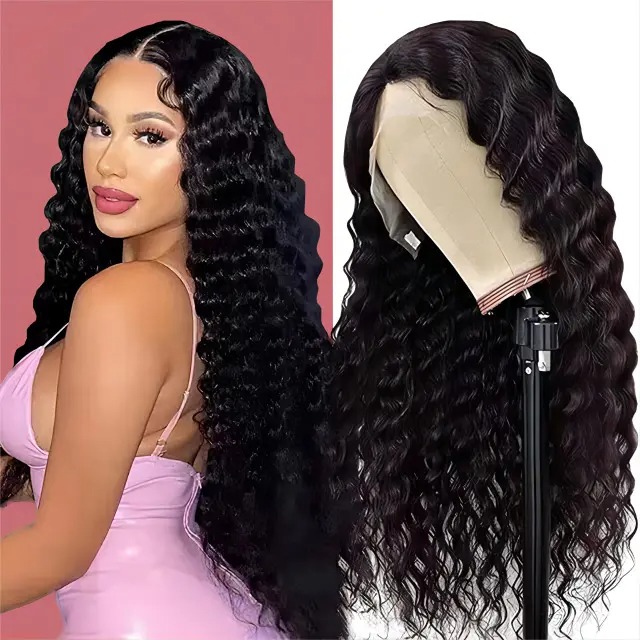
Assessing Customization and Scalability Limits
Factor 3: Flexibility in Order Volumes and MOQs
Salons operate on strict cash flow margins. You must align a vendor's Minimum Order Quantity (MOQ) with your financial reality. High-end factories frequently enforce higher MOQs. They dedicate assembly lines to specific production runs. This structured approach yields significantly lower defect rates. Trading companies often offer zero MOQs. However, they source random batches from various workshops, resulting in highly inconsistent quality.
Avoid vendors pushing massive bulk orders upfront. Never sign a large contract without executing a paid sample run first. A reputable factory respects your need to test their supply chain agility. They will accommodate a small initial run to prove their operational competence.
Factor 4: OEM/ODM Capabilities for Custom Units
Standard inventory caters to average buyers. Premium salons cater to unique clientele. You must determine if the vendor can produce custom Lace Wigs tailored to specific salon demands. Standard sizes rarely fit everyone perfectly. You need a partner capable of executing precise modifications.
Request their Original Equipment Manufacturer (OEM) portfolio. Look for their ability to deliver unique densities, proprietary cap sizes, and medical-grade breathable meshes. Clients suffering from alopecia or undergoing chemotherapy require ultra-soft, specialized cap constructions. If a vendor only sells off-the-shelf units, they limit your salon's growth potential. Always ask detailed questions about intellectual property protection. You want assurance nobody else can copy your proprietary salon designs.
Supplier Capability Matrix
Capability Dimension | Trading Company (Middleman) | Premium Direct Manufacturer |
Customization Level | Low. Only standard colors and sizes. | High. Custom densities, sizing, and medical caps. |
Minimum Order (MOQ) | Often 1 unit. Highly flexible. | Usually 10-50 units for custom runs. |
Quality Consistency | Variable. Batch-to-batch changes occur. | Strict. Standardized SOPs ensure consistency. |
Intellectual Property | None. Sells identical items to competitors. | Strong. Offers exclusive NDA agreements. |
Calculating the True Overall Cost
Factor 5: Landed Costs and "Restocking" Traps
Amateur buyers judge vendors strictly by the factory invoice price. Seasoned salon owners calculate the true overall cost. The unit price never represents your final expenditure. Shipping logistics, packaging dimensions, and customs duties drastically impact your margins. These hidden variables swing the final landed cost by 5% to 20%.
A vendor might quote a highly attractive unit price. Then they ship the product in oversized, heavy branded boxes. Freight carriers charge based on dimensional weight. You end up paying exorbitant shipping fees for empty cardboard space. Request flat-packing for wholesale orders to drastically reduce your freight burden.
You must also audit the vendor's return policy relentlessly. Identify restrictive "restocking" traps before wiring funds. Many overseas suppliers charge a 20% restocking fee on returned items. Some enforce a tight 3-day return window. If a client buys a unit and returns it a week later due to shedding, you absorb the entire loss. These predatory policies shift all liability directly to the salon.
Understanding Face Value vs. True Landed Cost
Cost Category | Face Value Invoice (Illusion) | True Landed Cost (Reality) |
Base Unit Price | $150.00 | $150.00 |
Payment Gateway Fees | $0.00 (ignored) | $6.00 (approx. 4% PayPal/Stripe) |
Dimensional Shipping | $10.00 (quoted flat rate) | $25.00 (actual volumetric cost) |
Customs & Tariffs | $0.00 (ignored) | $12.00 (varies by region) |
Restocking Risk Buffer | $0.00 | $15.00 (amortized risk) |
Final Total Cost | $160.00 | $208.00 (30% Higher) |
Securing Supply Chain Stability and Ethics
Factor 6: The "Dual-Sourcing" Strategy
Relying on a single factory creates massive operational vulnerability. A local holiday, a customs delay, or a factory shutdown leaves your salon with empty shelves. Protect your inventory flow by implementing the "60/40 Dual-Sourcing" strategy.
Allocate 60-70% of your total inventory budget to a premium overseas manufacturer. This bulk allocation secures superior profit margins and unlocks deep customization options. Keep the remaining 30-40% of your budget with a local or domestic distributor. Local vendors charge higher unit prices. However, they provide rapid, zero-timezone restocks. When a sudden viral trend creates a demand spike, your local distributor replenishes your stock in two days. This balanced approach protects your margins while eliminating stockout risks.
Factor 7: Ethical Sourcing and Transparency
Modern consumers care deeply about product origins. Ethical sourcing represents both a moral obligation and a powerful marketing asset. Ask your prospective vendors direct, uncomfortable questions. Where exactly do they source their raw donor hair? What do their factory labor conditions look like?
Unscrupulous factories exploit vulnerable populations to secure cheap raw materials. Reputable vendors offer complete transparency regarding their supply chain. They willingly provide documentation proving they pay fair market rates to donors. They showcase clean, safe working environments for their factory employees. When you partner with an ethical manufacturer, you transfer that trust to your clients. Salons promoting verifiable, ethically sourced products command higher retail prices and enjoy fiercer client loyalty.
Common Mistakes in Sourcing
Assuming "remy" on a label guarantees ethical collection methods.
Ignoring major overseas holidays (like Lunar New Year) which halt production for weeks.
Failing to communicate your salon's brand values to the vendor upfront.
Validating Vendor Accountability and Support
Factor 8: Objective Review Analysis and QC Documentation
You cannot manage what you cannot measure. Demand rigorous Quality Control (QC) documentation before any shipment leaves the factory floor. Request an Acceptable Quality Limit (AQL) sampling report. In premium hair manufacturing, a defect rate of 2-3% remains standard. You need proof they actively monitor this metric.
Insist on personalized video proof of your specific batch. Scammers frequently send generic stock footage of pristine hair. Require them to show your invoice or a specific handwritten note next to your finished units on camera. This simple step eliminates a massive amount of fraud.
When auditing a vendor's third-party reviews, employ critical thinking. Ignore isolated, highly emotional complaints. One angry customer does not define a business. Instead, search for systemic operational patterns. Do multiple reviews mention excessive shedding after two weeks? Do clients constantly complain about delayed shipping or wrong cap sizes? These patterns reveal the true operational health of the factory.
Finally, perform a communication stress test. Monitor their responsiveness across different time zones. A true partner communicates proactively. Confirm their willingness to replace defective units under a documented money-back guarantee. If they hesitate to put their replacement policy in writing, walk away immediately.
Conclusion
Sourcing premium inventory ultimately functions as a rigorous process of risk elimination. You cannot afford to gamble your salon's reputation on cheap, unverified products. Focus intensely on calculating the total landed cost rather than getting blinded by cheap unit prices. Execute the "Client's First-Week" stress test on every new sample to expose hidden silicone masking and weak knotting. By adopting a strategic dual-sourcing model, you protect your profit margins while ensuring rapid restocks during emergencies.
Take decisive action today. Before committing thousands of dollars to a new vendor, outline your salon's non-negotiable specifications clearly. Order a single, full-priced unit. Execute your own in-house quality audit. Only move forward when the vendor proves their commitment to structural integrity, supply chain transparency, and reliable communication.
FAQ
Q: How do I verify if a Lace Wigs manufacturer is a real factory or just a trading company?
A: Request a live video tour of the production floor, ask for ISO/QC certifications, and check if they can accommodate custom cap construction rather than just offering off-the-shelf inventory.
Q: What is a standard acceptable defect rate when buying wholesale wigs?
A: In premium human hair manufacturing, a defect rate (tangling, poor bleaching, cap sizing errors) of 2-3% is standard. Ensure your contract includes clauses for immediate replacement of units falling outside acceptable QC bounds.
Q: How long does it realistically take to produce custom Lace Wigs?
A: While stock units ship in days, true OEM customization (hand-tying, custom coloring, specific densities) typically requires a lead time of 15 to 30 days, plus transit time.


