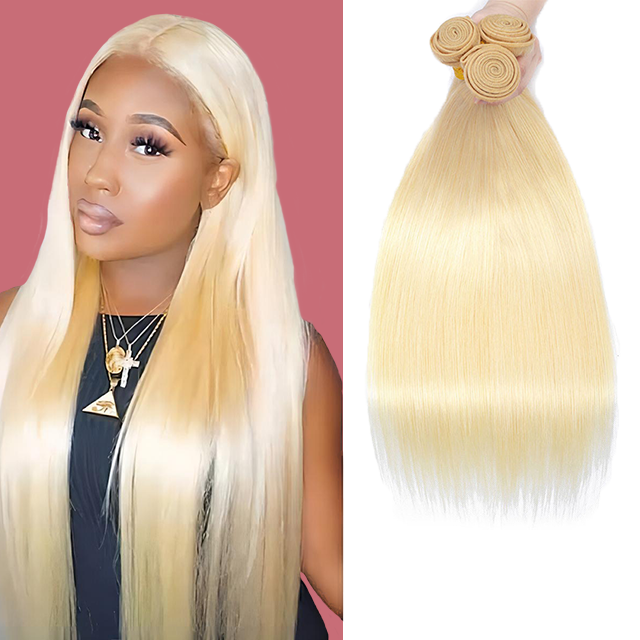
Achieving vibrant, predictable custom hair colors requires a flawless, pre-lightened canvas. Lifting dark extensions often compromises hair integrity before the color process even begins. Salon professionals and custom wig makers waste hours lifting dark bundles. This risks cuticle damage, uneven porosity, and severe shedding. Purchasing low-tier pre-lightened hair results in tangling, color bleeding, and dissatisfied clients. Whether worn as a striking platinum blonde as-is or used as a blank canvas for vivid transformations, sourcing premium 613 blonde hair bundles eliminates the high-risk bleaching phase. This guide breaks down how to evaluate, select, and source these bundles. You will learn how to ensure maximum color retention, structural integrity, and seamless installs for every custom unit.
Key Takeaways
Optimal Canvas: 613 blonde hair bundles provide a neutral, level-10 base, essential for achieving true-to-tone pastels, vivids, and complex dimensional colors without structural degradation.
Texture-Specific Porosity: Texture dictates color absorption; 613 blonde straight hair bundles absorb color differently than 613 blonde curly hair bundles, requiring adjusted processing times.
Complete System Integration: For flawless custom wigs and traditional sew-ins, bundles must be perfectly color-matched with high-quality 613 lace closures or frontals.
Supplier Vetting is Critical: A reliable human hair bundles supplier must provide transparent processing histories to guarantee the hair can withstand secondary chemical treatments (dyeing) without melting or shedding.
Risk Mitigation: Implementing strict strand testing for elasticity and porosity prior to full-bundle coloring prevents costly inventory loss.
Framing the Problem: Why 613 is the Standard for Custom Color Transformations
Manually lifting natural black hair to a level 10 blonde is a labor-intensive process. It requires multiple rounds of lightener, precise timing, and extensive bond-repair treatments. The chemical reality of melanin oxidation means you are systematically breaking down the hair's structural disulfide bonds. This manual lifting process consumes hours of valuable salon time. It also drives up chemical costs significantly. More importantly, pushing dark hair to a platinum state often leaves the cuticle frayed and highly porous. When you attempt to color over compromised cuticles, the dye molecules slip right out after a few washes.
Predictability in color depositing is the primary reason professionals rely on pre-lightened extensions. A uniform 613 base ensures that watercolors, semi-permanent vivids, and permanent toners develop exactly as formulated. When you apply a pastel pink or an icy silver to manually bleached hair, underlying yellow or orange pigments often push through. This creates muddy, brassy results. A clean level-10 canvas eliminates these unwanted undertones entirely. You gain complete control over the final shade. You can mix custom formulas knowing the hair will reflect the exact pigment in your bowl.
Not all pre-lightened hair performs equally. High-quality bundles must meet strict success criteria before you apply custom color. Intact cuticles are non-negotiable. The hair must feature consistent weight from the weft down to the ends, avoiding a stringy appearance. You must also secure a strict "no mix" guarantee. The presence of synthetic or animal fillers will ruin a custom color job, as these fibers reject professional hair dye. Finally, the absence of severe split ends indicates the hair was lifted gently, preserving its internal moisture.
Solution Categories: Evaluating Texture Options for Color Goals
Texture fundamentally alters how hair interacts with light and absorbs chemical color. Selecting the right texture is just as critical as choosing the right dye formula. Different wave patterns require different application techniques and processing times.
Straight Hair Applications
For precision cuts like blunt bobs, color melting, and delicate pastel applications, 613 blonde straight hair bundles are the optimal choice. Straight hair reflects light better than any other texture. This high reflectivity makes it the perfect canvas for showcasing seamless color gradients. However, this same reflectivity makes color inconsistencies highly visible. Straight bundles are the easiest texture to evaluate during intake. You can quickly inspect the lengths for split ends, uneven processing, or yellow banding. When coloring straight bundles, you must ensure full saturation. Section the hair thinly and massage the color into the strands to avoid hollow spots.
Body Wave Versatility
When executing dimensional coloring, balayage effects, or custom highlights, 613 blonde body wave hair bundles offer unmatched versatility. The gentle wave pattern provides natural movement that complements multi-tonal color work. The critical evaluation metric here is pattern retention. You must assess whether the wave holds after washing and coloring. Low-quality bundles often lose their signature "S" pattern once saturated with heavy color creams and warm water. High-quality body wave hair retains its texture memory even after secondary chemical processing. Apply color using a sweeping motion to mimic natural sun-kissed highlights along the ridges of the waves.
Deep Wave Considerations
High-volume custom wigs and vibrant, textured installs require a tighter curl pattern. 613 blonde deep wave hair bundles deliver exceptional density. It is important to understand that deep wave hair undergoes steam processing to achieve its uniform pattern. You must evaluate how this secondary steam processing affects the hair's porosity when combined with the initial bleaching process. Deep wave bundles often absorb liquid color much faster than straight bundles. You will need to adjust your processing times accordingly to prevent over-depositing. When using the watercolor method on deep wave hair, dip the bundles quickly and rinse immediately to avoid turning the hair too dark. The hot water used in the watercolor method opens the cuticle rapidly, allowing pigment to rush in. If you leave the bundle submerged for even a minute too long, a pastel pink can quickly turn into a dark magenta.
Curly Hair Challenges
Matching natural textures with bold color statements requires careful handling. Curly hair is naturally drier because the spiral structure prevents natural oils from traveling down the shaft. 613 blonde curly hair bundles require rigorous evaluation for moisture retention and elasticity. If the hair feels brittle or stiff straight out of the package, it will likely snap during the coloring process. You must ensure these bundles maintain high elasticity so they do not become excessively dry post-coloring. Always follow up any color service on curly hair with an intensive hydration mask.
Texture Type
Porosity Level
Color Absorption Rate
Recommended Application Method
Straight
Low to Medium
Standard
Bowl and brush, full saturation
Body Wave
Medium
Standard to Fast
Balayage sweeping, foil isolation
Deep Wave
High
Fast
Rapid watercolor dip, quick rinse
Curly
Very High
Very Fast
Diluted formulas, heavy conditioning mix
Completing the Install: Matching Bundles with 613 Lace Closures and Frontals
Purchasing standalone bundles is insufficient for custom wig makers and installation specialists. To construct a seamless, natural-looking hairline, matching lace systems are strictly required. Whether you utilize 4x4 closures, 5x5 closures, or full 13x4 frontals, the lace piece must perfectly match the bundle texture and color level. A mismatched frontal ruins the illusion of a natural scalp.
Customizing these lace systems introduces unique challenges. When working with a level 10 blonde base, the lace often requires careful root smudging or lace tinting to match the client's actual scalp tone. This is especially true when the bundles are custom-colored with dark roots or shadow roots. You must apply demi-permanent color meticulously to the roots of the frontal. If the dark dye bleeds through the lace, it will stain the mesh and create an unnatural, dark grid on the forehead. Use a thick styling gel or protective spray on the underside of the lace before applying root colors to create a barrier. You can also use a blow dryer on a cool setting to dry the root color quickly, preventing it from oxidizing and expanding down the hair shaft onto the lace.
Knot integrity is a major vulnerability in pre-lightened lace systems. Because the hair is already bleached to a level 10, the knots tied to the lace are inherently fragile. They have undergone maximum chemical lifting. These knots are highly susceptible to shedding if over-manipulated during the coloring, washing, or styling process. Gentle handling, avoiding harsh scrubbing, and applying knot sealers are mandatory steps to preserve the longevity of a 613 frontal. Never brush the frontal aggressively while it is wet and saturated with color.
Evaluation Dimensions: Assessing Hair Integrity and Scalability
Before committing to bulk inventory or applying expensive custom colors, you must evaluate the structural integrity of the hair. Visual inspections are not enough. You need technical testing frameworks to ensure the hair will survive the chemical services you plan to offer.
Cuticle Alignment and Terminology
Cuticle alignment dictates how the hair behaves under friction. Non-Remy hair, where cuticles face opposing directions, will inevitably mat when subjected to the friction of washing and coloring. Unidirectional cuticles are non-negotiable for custom color work. You will often see the term "raw 613" in marketing materials. Since this hair is inherently bleached, it is no longer truly raw or virgin. However, premium suppliers use the term to indicate that the starting material was high-quality, single-donor hair before the lifting process. This starting quality makes the final product highly durable and easy to re-dye.
Porosity and Elasticity Testing
Implement a professional testing framework before bulk coloring. The stretch test evaluates elasticity. Take a few wet strands and gently pull them. Healthy hair will stretch slightly and return to its original length. If it snaps immediately, the hair is over-processed. If it stretches and turns gummy without returning, the internal structure is compromised. The water drop test evaluates porosity. Place a drop of water on a clean, dry strand. If it absorbs instantly, the hair is highly porous and will grab color aggressively. If the water beads up and sits on the surface, the cuticle is tight and healthy.
Weft Construction Analysis
Weft construction directly impacts the final visual density of your custom color. Single-drawn wefts contain multiple hair lengths, resulting in thinner ends. Double-drawn wefts ensure the majority of the hair is the same length. This guarantees the color looks dense and saturated all the way to the ends, preventing a transparent, stringy appearance. Inspect the track itself. The stitching should be tight and uniform, with no loose threads or shedding when you run your fingers firmly down the bundle.
Testing Metric
Testing Method
Ideal Result for Custom Coloring
Warning Sign (Do Not Color)
Elasticity
Stretch wet strand gently
Stretches up to 30% and returns to shape
Snaps immediately or turns gummy/mushy
Porosity
Water drop test on dry strand
Water sits briefly before slow absorption
Immediate absorption (highly porous)
Filler Presence
Burn test on isolated strands
Turns to ash with a distinct hair smell
Melts into hard plastic bead (synthetic mix)
Cuticle Health
Slide fingers up the hair shaft
Slight resistance, feels relatively smooth
Extreme roughness or immediate tangling
Implementation Risks and Mitigation in Custom Coloring
Even with premium hair, the custom coloring process carries inherent risks. Applying secondary chemicals to pre-lightened hair requires a modified approach to prevent structural failure. You cannot treat level 10 extensions the same way you treat virgin dark hair.
The most severe risk is over-processing and cuticle damage. Applying developers that are too harsh on already-lightened hair can cause the hair to melt or snap. You do not need high lift to deposit color on a level 10 base. Mitigation requires using low-volume developers. Stick to 10-volume or dedicated deposit-only toning lotions. Furthermore, you must incorporate bond-building treatments directly into your color formulations. These additives protect the disulfide bonds during the color deposit phase, maintaining the hair's tensile strength. Mix the bond builder directly into your color bowl according to the manufacturer's exact ratios. Do not eyeball the measurements, as too much bond builder can dilute your color and affect the final deposit.
Uneven color uptake, or patchiness, is a common issue when working with textured blonde bundles. Highly porous sections of the bundle, typically near the ends, may grab color too quickly. This results in dark spots or muddy sections. Mitigation involves pre-treating the bundles. Always apply a professional porosity-equalizing spray before applying custom colors. This is especially critical on curly and deep wave textures, where porosity can vary wildly along the hair shaft.
Post-color shedding occurs when chemical processing weakens the bond at the weft. Heavy creams, dyes, and prolonged moisture exposure can degrade the stitching. Mitigation starts before the color touches the hair. Seal the wefts with a polyurethane or acrylic-based sealant prior to washing and coloring. During application, avoid saturating the weft track directly with heavy dyes. Keep the color focused on the hair strands to protect the structural integrity of the track.
To ensure a flawless color application, follow this standardized mitigation sequence:
Detangle the bundles completely using a wide-tooth comb to remove any loose hairs.
Apply a liquid weft sealant along the track and allow it to dry completely.
Mist the entire bundle with a porosity-equalizing spray, focusing heavily on the ends.
Mix your color formula using only 5-volume or 10-volume developer.
Apply the color rapidly to ensure even processing time across the entire bundle.
Rinse with cool water to help seal the cuticle and lock in the new pigment.
Overall Value: Sourcing from a Human Hair Bundles Supplier
Your custom color results are entirely dependent on the quality of your supply chain. Identifying a reliable partner requires vigilance and a structured approach to vetting. You cannot build a reputation for flawless custom wigs if your raw materials fail during the coloring process.
Watch for immediate red flags in wholesale purchasing. Synthetic fiber blending is a critical failure point; synthetic strands will not take professional hair dye, leaving you with patchy, un-dyeable streaks. To perform a burn test, isolate a few strands and hold them with tweezers. Ignite the ends with a lighter. Human hair will burn briefly, turn to ash, and smell strongly of burning feathers or sulfur. Synthetic hair will melt, sizzle, and form a hard, sticky plastic bead while emitting a chemical plastic odor. Chemical corn-chip odors indicate the hair was subjected to harsh acid baths to strip the cuticles, a common tactic to mask low-quality, non-Remy hair. Inconsistent coloring, such as harsh yellow banding along the bundle, indicates poor lifting techniques that will complicate your custom toning process.
Structuring a custom hair bundles wholesale inquiry requires precision. When contacting a human hair bundles supplier, do not just ask for price lists. Provide a strict framework of requirements. Key questions to ask include: "What is the specific donor origin?", "What chemical lifting process is used to achieve the level 10 shade?", "Do you offer matching transparent lace closures for every texture?", and "Do you offer sample orders specifically for chemical testing?" Demand transparency regarding their cuticle alignment guarantees.
Finally, evaluate the longevity trade-offs. Premium single-donor bundles carry a higher upfront investment. However, the long-term return is vastly superior. High-quality extensions are reusable and re-dyeable. They survive multiple installs and color shifts without matting. This durability generates higher client satisfaction, reduces refund requests, and drives reliable repeat business for your salon or wig company.
Conclusion
Pre-lightened bundles are an essential investment for stylists and wig makers prioritizing custom color. They eliminate the unpredictable, damaging, and time-consuming manual bleaching phase. Provided the hair passes strict integrity, elasticity, and porosity tests, a level-10 canvas allows for flawless execution of vivids, pastels, and complex toners. Base your purchasing decisions strictly on your end-goal. Choose straight bundles for pastels and precision cuts. Opt for body wave for dimensional balayage and highlights. Select curly or deep wave textures for high-volume, vibrant styles. Always ensure you secure matching lace closures or frontals to guarantee a complete, seamless install.
To move forward effectively, execute the following steps:
Draft a comprehensive wholesale inquiry detailing your exact texture, length, and closure requirements.
Request sample bundles across different textures to verify consistency and quality.
Perform elasticity, porosity, and burn tests on the samples before committing to bulk inventory.
Execute a test color deposit using your standard salon formulas to verify true-to-tone results.
FAQ
Q: Can I wear 613 blonde hair bundles as-is without custom coloring?
A: Yes. The bright platinum blonde is highly popular for standalone installs and custom wigs. To maintain the bright blonde without brassiness, use a high-quality purple shampoo to neutralize any yellow tones over time.
Q: Can 613 blonde hair bundles be bleached again?
A: It is highly discouraged. This hair has already been lifted to a level 10. Applying bleach again risks severe structural damage, melting, and breakage. Use deposit-only colors or toners instead.
Q: What is the difference between 613 blonde and honey blonde bundles?
A: 613 is a platinum, light bleach-blonde used as a blank canvas for vibrant colors. Honey blonde has warm, brownish-gold undertones and is typically worn as-is rather than used for custom vivid coloring.
Q: How do I stop 613 blonde curly hair bundles from drying out after coloring?
A: Curly hair is highly porous. Use sulfate-free shampoos, apply deep conditioning masks weekly, and utilize leave-in conditioners and lightweight oils to seal the cuticle and retain moisture.
Q: Do 613 blonde body wave hair bundles lose their pattern when dyed?
A: High-quality bundles will retain their wave pattern if colored gently. However, excessive manipulation, boiling water, or harsh chemicals can loosen the steam-processed wave pattern.
Q: What developer should I use when toning 613 blonde straight hair bundles?
A: Use a 5-volume or 10-volume developer, or a dedicated toning lotion. Because the hair is already lifted to a level 10, you only need to open the cuticle slightly to deposit color.
We are always ready to assist you with your inquiries. You can contact us via email or WhatsApp, and we will make every effort to help resolve your issues and meet your needs.